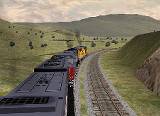
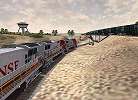
Our
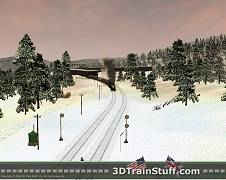
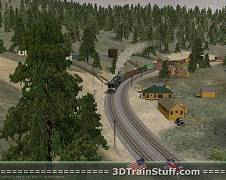
Donner Pass Route - High Sierra Crossing
features over 90 miles of double track
mainline over Southern Pacific's historic
Overland Route between Colfax, Ca in the
west, to Truckee, Ca to the east. Set
in the 50s during the height of the steam
to diesel transition era.
Route
History
It
was the Central Pacific railroad that
completed the original line (#1 track),
over the high Sierras back on December
13, 1867, and was part of the first transcontinental
railroad across the United States. Its
construction was a magnificent feat, involved
thousands of workers. Unfortunately many
lost their lives in the process due to
the harsh and dangerous work conditions.
In
1901 the Southern Pacific took control
of the line, and in the mid 1920s, a second
line (#2 track) was constructed over the
pass in order to facillitate a "great
expansion" of service over the line.

more
maps and screenshots coming soon
|
S1 Valves [repack] -
The designation “S1 valve” occupies a fascinating niche at the intersection of engineering and human physiology. While seemingly disparate, the principles governing the S1 valve in high-performance internal combustion engines and the S1 heart sound (often referred to in clinical contexts as the “S1 valve closure”) share a common theme: the management of fluid dynamics under pressure. Whether controlling the explosive flow of an air-fuel mixture or regulating the unidirectional flow of venous blood, the “S1” nomenclature denotes a primary, first-stage mechanism critical for system integrity, efficiency, and longevity.
In mechanical engineering, particularly within the context of two-stroke and four-stroke engines, the S1 valve (often part of a sequential valve system) is a specialized component designed to optimize intake and exhaust timing. Unlike standard poppet valves, an S1 valve is frequently part of a reed valve or rotary valve assembly. Its primary function is to act as a one-way check valve, ensuring that the air-fuel mixture enters the combustion chamber at precisely the right moment while preventing backflow into the intake tract. s1 valves
The design of a mechanical S1 valve is a study in material science and fatigue resistance. Constructed from high-grade steel or titanium alloys, the valve must withstand extreme temperatures (exceeding 800°C on the exhaust side) and rapid cycling rates—opening and closing thousands of times per minute. Failure of an S1 valve leads to catastrophic consequences: loss of compression, backfiring, or complete engine seizure. Therefore, the valve’s seat geometry, spring tension, and thermal conductivity are meticulously calculated. In this context, “S1” signifies the first stage in a synchronized sequence, where timing tolerances are measured in milliseconds. A sticking or burnt S1 valve directly translates to power loss and increased emissions, highlighting its role as a gatekeeper of thermodynamic efficiency. The designation “S1 valve” occupies a fascinating niche
The mechanics of the biological S1 valve system are remarkably analogous to its mechanical counterpart. The mitral and tricuspid valves consist of thin, flexible leaflets (cusps) anchored by chordae tendineae to the ventricular wall. When the ventricle contracts, the pressure differential forces these leaflets to coapt (seal). The resulting sound’s intensity, splitting, and timing provide a non-invasive diagnostic window into cardiac health. A loud S1 may indicate mitral stenosis (a thickened, rigid valve), while a soft S1 can signal heart failure or a poorly contracting ventricle. A “splitting” of S1—where the mitral and tricuspid components close audibly apart—suggests an electrical conduction delay. Thus, auscultation of the S1 sound allows clinicians to diagnose valvular regurgitation, stenosis, or structural anomalies without a single incision. The design of a mechanical S1 valve is
In stark contrast, the biological “S1 valve” is not a physical valve name but a clinical auditory phenomenon. In cardiology, the “first heart sound” (S1) is the sound produced by the closure of the atrioventricular (AV) valves—the mitral and tricuspid valves—at the beginning of systole (ventricular contraction). While there is no valve literally named “S1,” the term is clinically inseparable from the function of these two critical biological check valves. The familiar “lub-dub” of the heartbeat begins with “lub” (S1), marking the moment the ventricles pressurize and the AV valves snap shut to prevent regurgitation of blood into the atria.
The S1 valve—whether understood as a physical component in an engine or the acoustic signature of a heartbeat—represents a fundamental solution to a universal problem: controlling transient fluid forces. The mechanical S1 valve ensures that controlled explosions produce work, not waste. The biological S1 valve ensures that the heart acts as a pump, not a passive conduit. By examining these two interpretations side by side, we appreciate that the laws of fluid dynamics do not distinguish between steel and tissue. In both cases, the integrity of the S1 mechanism is synonymous with the integrity of the entire system. When the S1 valve functions correctly, the engine roars to life, and the heart beats with a confident, singular “lub.” When it fails, the first sign of trouble is the absence of that perfect, pressurized closure. |
Price:
$44.35 (USD) includes free global shipping.
buy
it now
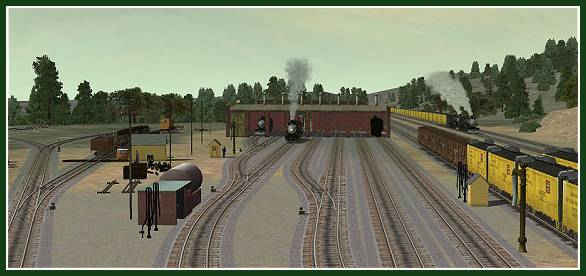
A
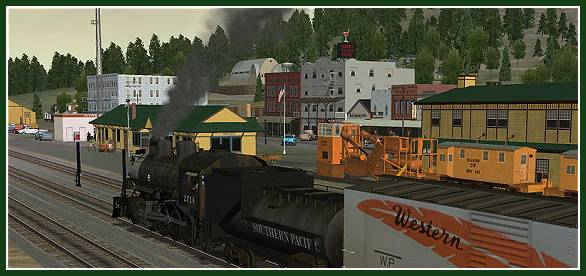
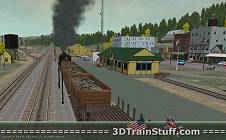
2-8-0 CONSOLIDATION GETS READY TO HELP ANOTHER
FREIGHT TRAIN OUT OF COLFAX, CA
Here
is what we included:
|
 90
miles of extreem mountain railroading
between West Colfax and East
Truckee on the Roseville Subdivison.
50s era. 90
miles of extreem mountain railroading
between West Colfax and East
Truckee on the Roseville Subdivison.
50s era.
Accurate
scenery over the entire route, including
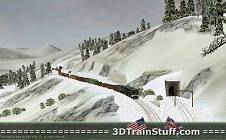
heavy snow and shed scenery between
Emigrant Gap and Norden.
Small
portion of the Tahoe Branch.
Distant
Mountains and Custom Ground Textures
using Demex and Mosaic.
Custom
interactive route objects.
|
18
activities covering SP's passenger,
freight, and helper operations.
Set during the steam
and diesel transition era.
To
see the activity work orders
CLICK
HERE
Donner
Pass Manual.
Route Map suitable
for printing.
Activity
Developer Notes and Rolling Stock
List for advanced MSTS users.
|
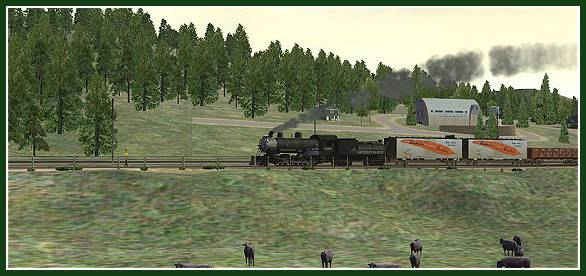
THE
TRUCKEE LOCAL HEADS OUT ON THE TAHOE BRANCH
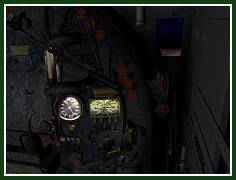 CONSOLIDATION
NIGHT CABVIEW
CONSOLIDATION
NIGHT CABVIEW |
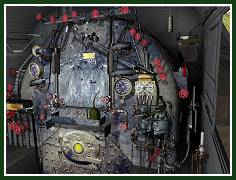 CONSOLIDATION
DAY CABVIEW
CONSOLIDATION
DAY CABVIEW |
Price:
$44.35 (USD) includes free global shipping.
buy
it now
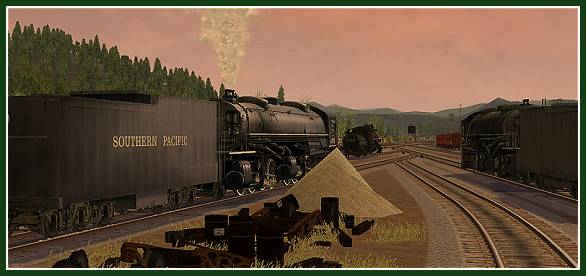
CONSOLIDATIONS
AND MALLETS WAITING IN TRUCKEE FOR THEIR TURN
UP THE HILL
|
7
SP 2-8-0 Consolidations with Custom Sounds
and Day and Night Cabviews - Snow
Versions Included
6
New SP Baldwin AC-10, AC-11, and AC12 Cabforwards
(Mallets) with
Custom Sounds and Day and Night
Cabviews - Snow Versions Included
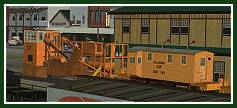
SP
Flangers, and Spreaders
|
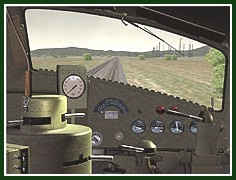
F7
DAY CABVIEW
7
New SP Bloody Nose and Black widow FP7s,
and F7s with
Custom Sounds and Day Cabview
- Snow Versions Included
|
Price:
$44.35 (USD) includes free global shipping.
buy
it now
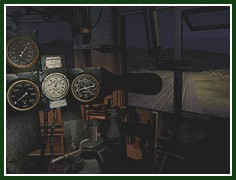 AC
CAB FORWARD NIGHT CABVIEW
AC
CAB FORWARD NIGHT CABVIEW |
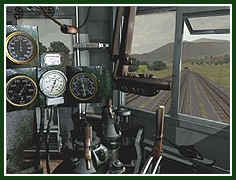 AC
CAB FORWARD DAY CABVIEW
AC
CAB FORWARD DAY CABVIEW |
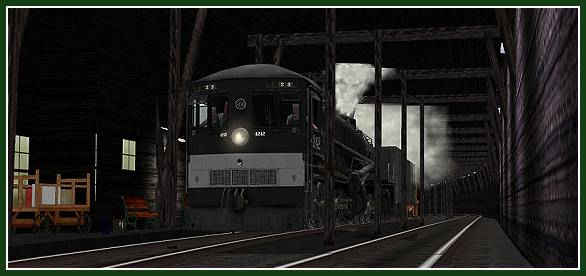
SP
4242 SLOWS DOWN TO PICK UP ITS TRAIN ORDERS AT
NORDEN
|
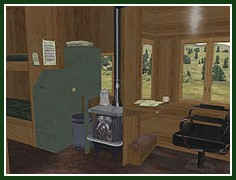
C-30-4
INTERIOR VIEW
2
C-30-4 Baywindow Cabooses With Custom
Interiors
12
40ft Box Cars
12
40ft Reefer Cars
3
36ft Single Dome Tank Cars
3
Gondola Cars With
Scrap and Gravel Loads
3
SP Gray/Black Heavy Weight Passenger
Cars
2
Cattle Stock Cars
11
Flat Cars With Lumber, Tractors,
M4 Tanks, and LCVP Loads
4
MoW Flat Cars With Loads
|
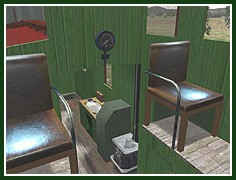
C-40-3
INTERIOR VIEW
1
C-40-3 Cupola Caboose With
Custom Interiors
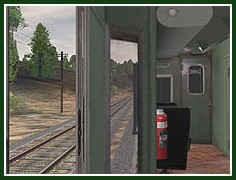
C-50-9
BAYWINDOW VIEW
2
C-50-9 Baywindow Cabooses With Custom
Interiors
6
Log Spline Cars With Loads
8
USRA Hopper Cars
|
Price:
$44.35 (USD) includes free global shipping.
buy
it now
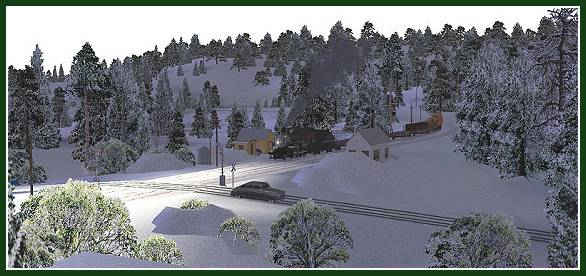
AN
EARLY MORNING MOW TRAIN HEADS TOWARDS MIDAS IN
THE WINTER
Price:
$44.35 (USD) includes free global shipping.
buy
it now
We
assure you, this is one of our best routes out
so far, and one that you will not want to miss
out on.
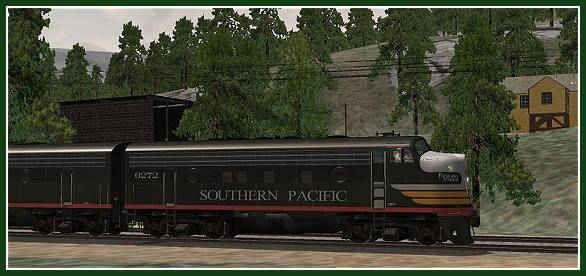
SP
6272 EAST LEAVES NORDEN AND STARTS ITS DESCENT
DOWN THE EASTERN SIDE OF THE SIERRAS
Price:
$44.35 (USD) includes free global shipping.
buy
it now
|