Kernel Mdf Viewer May 2026

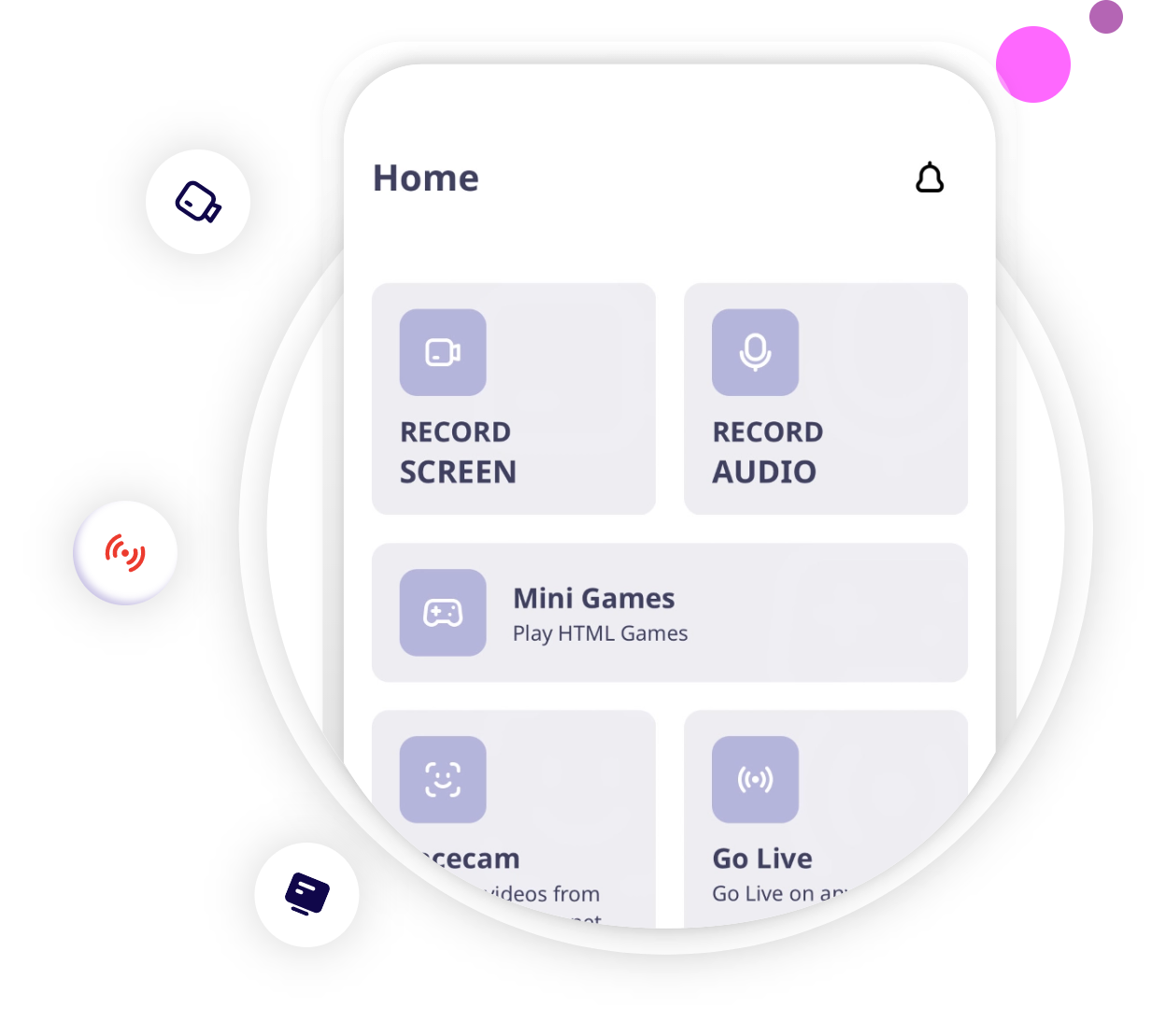
Experience seamless screen recording on your iOS device with our feature-rich iPhone and iPad screen recorder — completely watermark-free. With a fast-growing community of over 400K+ users, our app is trusted for its performance, simplicity, and smooth user experience.
Whether you're a gamer, student, educator, or professional, you can easily capture and share your favorite moments, tutorials, or presentations — all directly from your iPhone or iPad.

QR_code

Scan with your device

Android

Check Overview
For iOS Screen Recorder

Go throw this overview of iPhone Screen Recorder, the most advanced screen-capturing app.

Multiple Themes

Multiple Themes

Record Game For Sharing

Record Game For Sharing

Record Lecture

Record Lecture

Screencast webcam Videos

Screencast webcam Videos

Record your voice

Record your voice

Live Streaming

Live Streaming

Whiteboard

Whiteboard

Video Editing

Video Editing

Why Choose
Our iOS Screen Recorder?

Our iOS Screen Recorder delivers a smooth, intuitive experience built for users of all levels. With powerful features and a clean design, it sets a new benchmark in mobile screen recording — whether you're creating tutorials, gameplay clips, or video presentations.
Here's what makes our app a favorite among iPhone and iPad users:

In the realm of digital forensics and data recovery, few file formats are as widely encountered—and as technically dense—as the MDF file. Originally associated with Alcohol 120%’s proprietary disc image format, MDF files store sector-by-sector copies of optical media. A “Kernel MDF Viewer” is not a standard commercial product but rather a conceptual or niche tool class: a viewer that operates at kernel level to parse and expose the contents of MDF images. This essay examines the technical implications, forensic value, and potential risks of such a tool, arguing that while kernel-level access offers unparalleled fidelity, it demands rigorous safeguards. Understanding the Components An MDF file is typically accompanied by an MDS file (Media Descriptor Sheet), which stores metadata like layer breaks and copy protection flags. Unlike ISO, MDF can retain complex structures—multisession tracks, audio gaps, and subchannel data. A standard user-mode viewer reads the image through system APIs. A “kernel MDF viewer,” by contrast, loads a driver into the operating system’s kernel space, granting direct access to memory, storage I/O, and low-level filesystem routines. The viewer would mount the MDF image as a virtual block device, making its raw sectors available for inspection without going through virtual filesystem layers. Forensic Advantages For investigators, a kernel-mode MDF viewer offers two critical benefits. First, it preserves forensic soundness: by accessing sectors directly, the tool bypasses caching, locking, and metadata alterations introduced by user-mode filesystem drivers. This ensures hash values of the mounted image remain identical to the original. Second, it allows inspection of low-level structures often ignored by conventional tools—subchannel data, copy protection markers, and erased but not overwritten sectors. In cases involving legacy media, rogue disk images, or steganographic hiding in unused sectors, kernel-level access becomes indispensable. Technical and Security Risks However, running any filesystem parser inside the kernel significantly expands the attack surface. A malformed MDF image could trigger a buffer overflow in the viewer’s driver, leading to privilege escalation or system crash. Moreover, kernel drivers have unfettered access to physical memory and hardware; a bug could corrupt unrelated processes or, worse, the forensic evidence itself. Therefore, a responsible kernel MDF viewer must be digitally signed, audited against common vulnerabilities (e.g., use of ProbeForRead in Windows drivers), and run only in isolated, write-blocked environments—such as a dedicated forensic workstation with hardware write blockers. Alternatives and Best Practices For most forensic tasks, user-mode tools like FTK Imager, Arsenal Image Mounter, or OSFMount provide sufficient MDF viewing capability, often with kernel-mode mounting but user-mode parsing. True kernel-level viewing (i.e., parsing inside the kernel) is rarely justified except for research or anti-anti-forensic scenarios. Where used, it should be coupled with virtualized execution (e.g., a forensic hypervisor) and strict integrity checks (e.g., verifying the MDF’s hash against a known good source before mounting). Conclusion The “Kernel MDF Viewer” exemplifies a broader tension in forensic computing: low-level power versus systemic safety. It promises unmatched access to obscure disc structures, making it a valuable scalpel for advanced examiners. Yet that same power, if misused or poorly implemented, can compromise evidence or destroy system integrity. Consequently, such tools belong not on everyday analyst desktops but in controlled, auditable forensic laboratories—and even there, only when user-mode alternatives demonstrably fail. In the end, the kernel is no place for casual browsing; it is a realm reserved for surgical precision and sober responsibility. kernel mdf viewer


Kernel Mdf Viewer May 2026

In the realm of digital forensics and data recovery, few file formats are as widely encountered—and as technically dense—as the MDF file. Originally associated with Alcohol 120%’s proprietary disc image format, MDF files store sector-by-sector copies of optical media. A “Kernel MDF Viewer” is not a standard commercial product but rather a conceptual or niche tool class: a viewer that operates at kernel level to parse and expose the contents of MDF images. This essay examines the technical implications, forensic value, and potential risks of such a tool, arguing that while kernel-level access offers unparalleled fidelity, it demands rigorous safeguards. Understanding the Components An MDF file is typically accompanied by an MDS file (Media Descriptor Sheet), which stores metadata like layer breaks and copy protection flags. Unlike ISO, MDF can retain complex structures—multisession tracks, audio gaps, and subchannel data. A standard user-mode viewer reads the image through system APIs. A “kernel MDF viewer,” by contrast, loads a driver into the operating system’s kernel space, granting direct access to memory, storage I/O, and low-level filesystem routines. The viewer would mount the MDF image as a virtual block device, making its raw sectors available for inspection without going through virtual filesystem layers. Forensic Advantages For investigators, a kernel-mode MDF viewer offers two critical benefits. First, it preserves forensic soundness: by accessing sectors directly, the tool bypasses caching, locking, and metadata alterations introduced by user-mode filesystem drivers. This ensures hash values of the mounted image remain identical to the original. Second, it allows inspection of low-level structures often ignored by conventional tools—subchannel data, copy protection markers, and erased but not overwritten sectors. In cases involving legacy media, rogue disk images, or steganographic hiding in unused sectors, kernel-level access becomes indispensable. Technical and Security Risks However, running any filesystem parser inside the kernel significantly expands the attack surface. A malformed MDF image could trigger a buffer overflow in the viewer’s driver, leading to privilege escalation or system crash. Moreover, kernel drivers have unfettered access to physical memory and hardware; a bug could corrupt unrelated processes or, worse, the forensic evidence itself. Therefore, a responsible kernel MDF viewer must be digitally signed, audited against common vulnerabilities (e.g., use of ProbeForRead in Windows drivers), and run only in isolated, write-blocked environments—such as a dedicated forensic workstation with hardware write blockers. Alternatives and Best Practices For most forensic tasks, user-mode tools like FTK Imager, Arsenal Image Mounter, or OSFMount provide sufficient MDF viewing capability, often with kernel-mode mounting but user-mode parsing. True kernel-level viewing (i.e., parsing inside the kernel) is rarely justified except for research or anti-anti-forensic scenarios. Where used, it should be coupled with virtualized execution (e.g., a forensic hypervisor) and strict integrity checks (e.g., verifying the MDF’s hash against a known good source before mounting). Conclusion The “Kernel MDF Viewer” exemplifies a broader tension in forensic computing: low-level power versus systemic safety. It promises unmatched access to obscure disc structures, making it a valuable scalpel for advanced examiners. Yet that same power, if misused or poorly implemented, can compromise evidence or destroy system integrity. Consequently, such tools belong not on everyday analyst desktops but in controlled, auditable forensic laboratories—and even there, only when user-mode alternatives demonstrably fail. In the end, the kernel is no place for casual browsing; it is a realm reserved for surgical precision and sober responsibility.

macAppBg

Who Benefits from Our Screen Recorder?

Our Screen Recorder is the perfect tool for capturing and sharing your screen. Whether you're a content creator, educator, or business professional, our versatile software makes it easy to create stunning video content on your Mac. Install now and unleash your creativity!

CUSTOMER REVIEW

Our Mac screen recorder app goes beyond just basic screen recording - it offers an interactive recording feature that takes your

I've been using the macOS screen recorder for a while now, and it's been a game-changer for my video tutorials. The interface is easy to use, and the recording quality is excellent. Highly recommended!
I love the macOS screen recorder! It's helped me create professional-quality videos for my online courses. The editing features are robust, and the recording process is smooth. Thumbs up!
macOS screen recording is just great! I use it for my training videos and love the recording quality and editing options. Highly recommended!
Customer Review
I've been using macOS Screen Recorder for a few months now and I'm very satisfied. It allows me to create high quality videos for my business presentations. I Best for MacOS
I've tried several screen recorders for my Mac, and this one is by far the best. The recording quality is excellent, and the editing options are intuitive and easy to use. It's become an essential tool in my content creation workflow.

FAQs

Find Answers to Your iOS Screen Recorder Questions - Explore features, live streaming, annotations, and more. Enhance your recording experience today!"

faq_vec

An iOS Screen Recorder is a mobile application that allows you to capture and record your iPhone or iPad's screen, making it convenient for creating tutorials, gameplay videos, and more.

Our iOS Screen Recorder app offers a free trial with limited features. To access the full suite of functionalities, you can upgrade to the premium version through in-app purchases.

The free version of the iOS Screen Recorder may have time limitations for screen recording. However, the premium version allows for longer recordings without restrictions.

Absolutely! Both the free and premium versions of our iOS Screen Recorder come with audio recording support, enabling you to add voiceovers or background music to your videos.

Taking screenshots is straightforward with our iOS Screen Recorder. You can capture screenshots during recording or independently, preserving important moments with ease.

Yes, our iOS Screen Recorder allows you to record live streams and webinars, ensuring you never miss any important content.

The Whiteboard Recording feature lets you capture interactive whiteboard sessions, making it beneficial for educators and professionals during presentations or lectures.