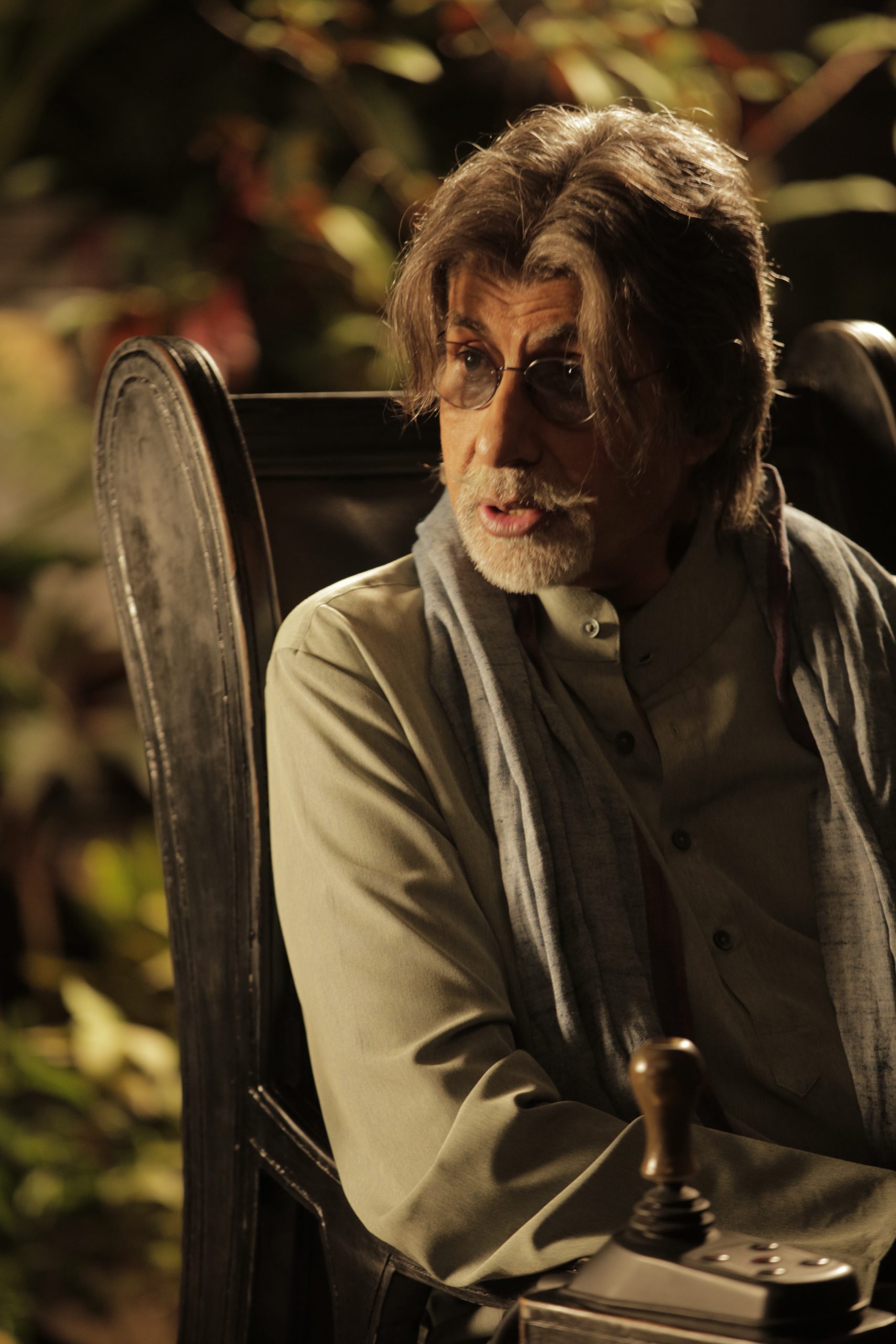
‘Wazir’ is a tale of two unlikely friends, a wheelchair-bound chess grandmaster and a brave ATS officer. Brought together by grief and a strange twist of fate, the two men decide to help each other win the biggest games of their lives. But there’s a mysterious, dangerous opponent lurking in the shadows, who is all set to checkmate them

The film's soundtrack album was composed by a number of artists: Shantanu Moitra, Ankit Tiwari, Advaita, Prashant Pillai, Rochak Kohli and Gaurav Godkhindi.The background score was composed by Rohit Kulkarni while the lyrics were penned by Vidhu Vinod Chopra, Swanand Kirkire, A. M. Turaz, Manoj Muntashir and Abhijeet Deshpande. The album rights of the film were acquired by T-Series, and it was released on 18 December 2015.

Sonu Nigam & Shreya Ghoshal


Ankit Tiwari

Javed Ali

Gagan Baderiya & Prashant Pillai

Amitabh Bachchan

Gaurav Godkhindi





By Akari Tanaka, Contributing Writer
Originally released in 2008 for Windows and later ported to the PSP, Imouto Life Monochrome has remained an obscure gem for over a decade. But in an era saturated with high-definition, high-fantasy anime tropes, players are rediscovering this title and asking a surprising question: Why does a game deliberately drained of color feel more vibrant than most modern titles? On its surface, the premise is simple. You play as Haru, a high school photography club member living in a seaside town. Your "imouto" (younger sister), a quiet, melancholic girl named Yuki, has recently lost her ability to perceive color following a traumatic family incident. To the world, Yuki sees only blacks, whites, and greys. imouto life monochrome
The relationship is not about a hero "fixing" a damsel. It is about cohabitation with grief. You cannot force Yuki to heal. You can only be present. The game’s multiple endings reflect this harsh truth. In the "bad" ending, Yuki learns to live in a grey world, becoming a functional but hollow artist. In the "true" ending, she regains her color vision—but not because of you. She does it herself, by taking the camera one day and photographing the back of your head as you walk away. She sees the "warm sepia of your love" on her own terms. Today, Imouto Life Monochrome is experiencing a quiet renaissance on Steam and Reddit, where fans call it the " Yokohama Kaidashi Kikō of sister games." In a culture of doom-scrolling and dopamine loops, the game’s demand for patience is revolutionary. By Akari Tanaka, Contributing Writer Originally released in
The gameplay loop is intentionally slow, meditative, and quiet. You walk, you observe, you frame a shot, and you return home to share it with Yuki over lukewarm barley tea. What makes the game unforgettable is its visual commitment to the title. For roughly 60% of the runtime, the screen is truly monochrome. Not sepia-toned, not pastel-washed, but stark black, white, and varying greys. The character sprites, the backgrounds, the UI—all of it. You play as Haru, a high school photography
The goal of Imouto Life Monochrome is not to defeat a final boss or save a kingdom. It is to re-introduce color into Yuki’s world—literally. As Haru, you spend your days capturing photographs. A red umbrella left on a rainy bench. The golden flash of a koi fish in a pond. The soft pink of a seashell held up to the sunset. Each significant "emotional anchor" you photograph has a chance to unlock a hue back into Yuki’s vision.