 Beetle
 T2 Bay
 T2 Split
 T25
T25
 Transporter T4
 Transporter T5
 Golf Mk1
 Golf Mk2


 911
911
 996
996
 997
997
 986 Boxster
 987 Boxster
 912
912
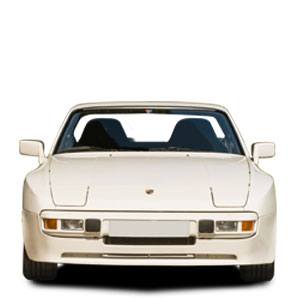 944
944
 924
924


 Defender
 Discovery Series 1
 Discovery 2
 Series 1, 2 & 3
 Freelander
 Freelander 2




Booting from a USB drive is an essential skill for any Windows 7 user. Whether you need to install a new operating system, run a live Linux environment, rescue corrupted files, or run memory diagnostics, knowing how to override the normal boot order is crucial.
Now you’re ready to install, repair, or rescue your Windows 7 system from a USB drive with confidence.
Once you’ve successfully booted once, remember that changing the boot order in BIOS is permanent. If you want to return to normal operation, either remove the USB drive before starting or change the boot order back to your internal hard drive as the first option.
However, Windows 7 predates the widespread standardization of UEFI and "plug-and-play" boot menus. This guide covers the complete process—from preparing your USB drive to modifying your BIOS settings. Before you can boot from a USB drive, the drive itself must be bootable . Copying files like a standard folder will not work. You need to write an ISO image or a bootable system to the drive.
| Manufacturer | Boot Menu Key | BIOS Setup Key | |--------------|---------------|----------------| | Dell | F12 | F2 | | HP | F9 | F10 or Esc | | Lenovo | F12 | F1 or F2 | | Acer | F12 | F2 | | Asus | Esc or F8 | F2 or Del | | MSI | F11 | Del | | Toshiba | F12 | F2 or Esc | | Sony | F11 or Esc | F2 or F3 | | Samsung | Esc or F12 | F2 |